
Phoenix’s Choice for Humane Bee Removal: Protecting Your Home & Our Pollinators
When bees become a concern around your Phoenix-area home or business, local bee removal experts prioritize safe, humane outcomes that safeguard both people and these vital pollinators, all while addressing potential structural risks. This guide dives into what these local specialists do, why their professional methods significantly reduce sting risks and property damage, and how humane relocation and preventative proofing contribute to ongoing pollination and long-term pest control. Many homeowners face a critical decision: attempt risky DIY solutions or trust trained teams equipped with specialized gear, containment strategies, and precise repair skills. This guide breaks down those choices, outlining the practical steps you can expect during a professional service call. You’ll discover why professional intervention is far safer than DIY attempts, how live relocation benefits our bee populations and local ecosystems, the importance of complete honeycomb removal and structural repair for preventing future issues, and the lasting value of professional bee proofing. We’ll also touch on specific considerations for Phoenix and nearby Scottsdale, highlighting humane services like Live Bee Removal and Relocation, along with solutions for swarms, honeycomb removal, and bee proofing. Read on for clear comparisons, a step-by-step look at relocation, and checklists to help you select the safest, most effective local bee removal service.
Why Is Professional Bee Removal Safer Than DIY Methods?
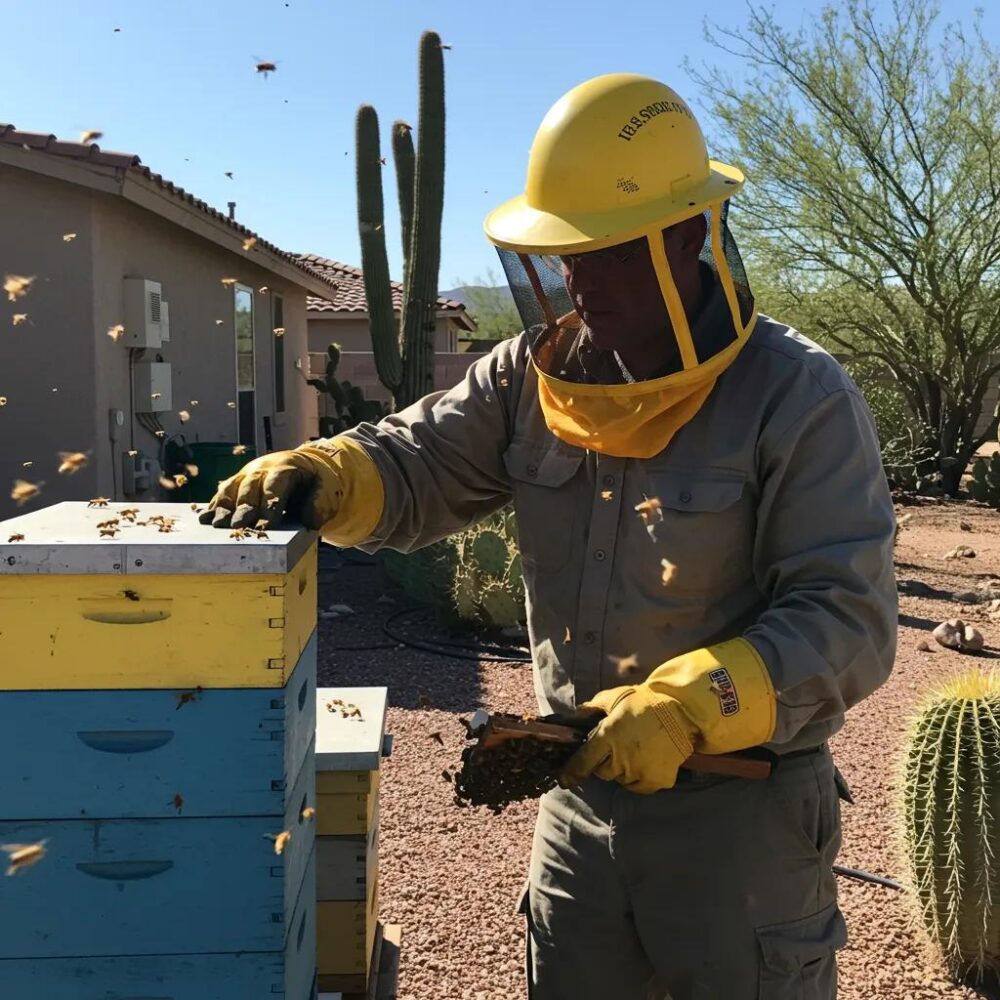
Professional bee removal is a specialized service, backed by training and essential equipment, designed to minimize sting risks through careful containment, personal protective gear, and a deep understanding of bee behavior. The core principle is simple: professionals expertly manage the environment, identify potentially aggressive species, and employ removal techniques that avoid provoking defensive reactions, thereby safeguarding residents and pets. The direct benefits include fewer injuries, a significant reduction in allergic emergencies, and a much lower likelihood of infestations escalating, especially when compared to haphazard DIY efforts. Understanding these crucial safety measures naturally leads to an examination of how experts implement containment and the protective gear they utilize.
Professionals consistently assess the hive’s location and maintain a safe distance, which is key to avoiding colony agitation, reducing sting incidents, and ensuring a more successful removal.
How Do Local Experts Minimize Sting Risks and Allergic Reactions?
Local experts effectively minimize sting risks by integrating procedural controls with robust protective equipment and close coordination with homeowners. They typically establish a secure perimeter, advise temporary evacuation if necessary, and ensure that individuals with allergies and pets remain safely away until the area is completely cleared. Protective measures are comprehensive, including reinforced suits and gloves, containment barriers, and immediate readiness for first aid in the event of unexpected stings, all contributing to a lower chance of severe reactions. These coordinated actions not only protect people in the moment but also reduce the likelihood of secondary incidents, seamlessly leading into a discussion about the specialized training and equipment professionals use for handling aggressive colonies.
What Special Training and Equipment Do Professionals Use for Aggressive Bees?
Technicians undergo rigorous training to recognize species-specific behaviors and escalation cues, particularly important for understanding how Africanized bees might behave in the Phoenix region, and they adhere to strict protocols to de-escalate swarm aggression. Essential equipment includes heavy-duty protective suits, specialized extraction tools, advanced vacuums designed for live capture, and secure containment boxes that allow for gentle removal without resorting to lethal methods. This combination of tools and expertise enables the safe extraction and transport of colonies for relocation rather than destruction. Because professionals rely on proven procedures and specialized gear, homeowners face significantly lower risks compared to attempting DIY methods.
The presence and behavior of Africanized honey bees in Arizona present unique challenges that necessitate specialized knowledge and preparedness.
Africanized Honey Bees in Arizona: Understanding and Preparedness
In 1990 the much anticipated arrival of the original African bees’ descendants, now called Africanized honey bees or “killer bees” reached the southern US and in 2 years, had spread to Arizona, New Mexico, and southwestern Texas. Africanized honey bees (AHB) are now found throughout much of South, Central and southern North America, but may have reached an upper and lower limit to their spread at about the 34°N and 34°S latitude (Visscher et al 1997; Kerr et al 1982), based in part to their inability to survive extended cold periods (Taylor 2003; Villa et al 1991, 1993). As Africanized honey bees spread, more than 1000 people and tens-of-thousands of domestic animals were kill
Africanized Bees: Better Understanding, Better Prepared, P Moore, 2015
Different removal approaches vary significantly in safety, speed of response, and the ultimate outcome; the table below offers a clear comparison of common DIY tactics against professional service attributes to highlight these crucial differences.
This table clearly illustrates that professional removal strikes a balance between human safety and the preservation of the bee colony, delivering predictable results and minimizing the need for follow-up interventions.
How Does Humane Bee Removal Protect Bees and the Environment?

Humane bee removal centers on live extraction and relocation, a process designed to preserve bee colonies and actively support local pollination efforts. This method involves carefully assessing the colony’s health, securing the affected site, and then transferring the bees to a designated relocation partner. The effectiveness of this approach lies in minimizing lethal control measures and directing healthy colonies to beekeepers or apiaries where they can continue their essential pollination work. The tangible benefit is the preservation of pollinator populations crucial for our urban landscapes, agriculture, and overall biodiversity, while simultaneously resolving nuisance issues around structures. Detailing the step-by-step relocation process next will provide homeowners with clear expectations regarding timelines and procedures.
Below is a concise, practical checklist outlining the typical relocation steps professionals follow when performing live bee removal and relocation.
- Initial assessment to determine colony size, location, and safety considerations.
- Containment and gentle extraction using boxes or specialized vacuums for live capture.
- Transport and handoff to a beekeeper or apiary partner for relocation and monitoring.
What Is the Live Bee Removal and Relocation Process?
The Live Bee Removal and Relocation process begins with a thorough assessment of the hive, including identifying all access points and estimating the colony’s size. It then proceeds to controlled extraction and secure transport to a designated relocation site. Technicians meticulously prepare containment boxes and employ non-lethal capture methods to collect the bees and, whenever possible, the queen, ensuring the colony’s viability for successful relocation. Typical timelines often involve a single visit for straightforward colonies, followed by checks to confirm no residual activity and to ensure homeowners understand the steps for sealing access points. This transparent process helps homeowners anticipate any disruption and supports relocation outcomes that benefit local pollination.
How Do Local Experts Support Bee Populations and Pollination?
Local experts actively support bee populations by forming partnerships with beekeepers and apiaries that readily accept relocated colonies. This collaboration is vital for preserving essential pollination services and maintaining local biodiversity. Relocated colonies continue their crucial work pollinating urban gardens, agricultural crops, and native plants, thereby sustaining the ecosystem services that both homeowners and communities depend on. Professionals consistently favor relocation over extermination whenever colony health permits, significantly reducing the unnecessary loss of these vital pollinators and bolstering ecological resilience. This strong ecological focus naturally leads into practical property-protection measures implemented after removal, such as comprehensive honeycomb cleanup and structural repairs to prevent recurring issues.
How Does Professional Bee Removal Prevent Property Damage?
Professional removal effectively prevents property damage by combining live removal or extraction with meticulous honeycomb cleanup and targeted structural repairs. This comprehensive approach addresses issues like moisture buildup, added weight, and the attraction of secondary pests that can result from lingering honeycomb. The core mechanism is a two-part solution: removal of the comb alleviates biological and structural stresses, and subsequent repair of damaged materials prevents secondary problems such as rot and further pest infestations. The primary benefit is a reduction in long-term repair costs and a significantly lower chance of re-infestation when cleanup and repairs are performed concurrently. Next, we will delve into why thorough honeycomb removal is critical for maintaining structural integrity and ensuring healthy indoor air quality.
Many homeowners underestimate the ongoing problems that can arise from residual honeycomb, which can compound without professional cleanup.
Why Is Comprehensive Honeycomb Removal Important?
Honeycomb left behind within walls or attics continues to attract moisture, promote mold growth, and add significant weight to structural cavities, accelerating material degradation and inviting secondary pests. Complete honeycomb removal eliminates the food source and nesting material that encourage recurring infestations, while also reducing odors and contamination within insulation and framing. The timeline for damage can be surprisingly rapid, especially in hot, humid conditions or where comb directly contacts structural elements, making prompt cleanup absolutely critical to limit the extent of necessary repairs. Thoroughly removing all comb is the essential precursor to repair work that restores structural integrity and effectively prevents future infestations.
Before commencing repair work, professionals often meticulously document any damage and remove all contaminated materials to ensure lasting remediation.
This comparison clearly demonstrates that integrating honeycomb removal with professional repairs yields the greatest long-term savings and the most robust structural protection.
How Do Repair Services Restore Structural Damage Caused by Bees?
Repair services typically involve replacing contaminated insulation, removing compromised drywall or sheathing, treating structural framing if necessary, and meticulously sealing all access points to prevent any possibility of re-entry. Technicians utilize materials specifically suited to the affected area—including insulation replacement, drywall patching, and appropriate sealants for vents and fascia—to fully restore barrier performance and indoor air quality. Recommended follow-up inspections are crucial to confirm that repairs have held effectively and that no residual comb remains, which is vital for preventing any return infestations.
To help homeowners understand the process, here is a concise checklist of common repair actions professionals undertake during remediation.
- Remove contaminated insulation and any honeycomb residue.
- Replace or patch drywall and sheathing as needed.
- Seal entry points with appropriate materials and recommend ongoing monitoring.
These comprehensive steps complete the remediation cycle and seamlessly transition into longer-term prevention strategies, such as professional bee proofing.
What Long-Term Benefits Does Bee Proofing Offer for Your Home?

Bee proofing provides essential protection for your structure by systematically identifying and sealing potential entry points, implementing exclusion techniques, and recommending natural repellents or monitoring strategies to significantly reduce the likelihood of future infestations. The core mechanism is preventive exclusion: sealing gaps, vents, and eaves effectively removes access and discourages colonization, leading to fewer recurring service calls and lower long-term repair expenses. The tangible benefits include substantial cost savings compared to repeated removal services, enhanced property protection, and invaluable peace of mind for occupants and businesses alike. Next, we will outline the inspection techniques and common proofing methods that professionals employ.
Before detailing the methods, here is a concise comparison of common proofing approaches, evaluated by their effectiveness, longevity, and cost.
This table highlights the trade-offs involved, enabling homeowners to prioritize durable exclusion methods before relying on shorter-term repellent solutions.
How Do Experts Identify and Seal Entry Points to Prevent Future Infestations?
Experts conduct systematic inspections, meticulously examining rooflines, vents, eaves, crawlspaces, and utility penetrations to map out likely entry points and check for any residual comb. They utilize specialized sealing materials, such as hardware cloth, exterior-grade sealants, and replacement trim, to close gaps and eliminate sheltered cavities where bees tend to nest. Homeowner preparation often involves clearing items from attics and providing technicians with safe access to problem areas, which expedites the remediation process. Effective sealing significantly reduces opportunities for colonization and forms the practical foundation for recommending ongoing monitoring or repellent applications.
What Are the Cost Advantages of Professional Bee Proofing Compared to DIY?
While professional bee proofing might involve a higher initial investment than simple DIY plugging attempts, it ultimately leads to significant long-term savings by preventing repeated emergency removals, costly secondary repairs, and potential health risks. Professionals apply durable materials and employ precise techniques that a homeowner might overlook, such as identifying and sealing hidden cavities and restoring the integrity of the building’s protective barriers, thereby preventing recurring expenses. Intangible benefits include valuable time saved, reduced exposure to risks, and the creation of a professional record of work that can be beneficial for future property sales or insurance claims. Investing in professional proofing typically pays for itself within a few avoided service calls and repairs.
To assist homeowners in prioritizing their needs, here are common proofing techniques that professionals frequently recommend.
- Sealing small gaps: Utilizing caulking and hardware cloth at vents and trim.
- Removing sheltered cavities: Replacing damaged soffits or trim to eliminate potential nesting spaces.
- Targeted repellents: Applying natural repellents during transitional seasons as a supplementary measure.
Implementing these methods effectively reduces structural vulnerabilities and supports long-term avoidance of bee colonies.
Why Choose Local Bee Removal Experts in Phoenix AZ?
Local experts bring invaluable regional knowledge regarding seasonal bee behavior, preferred nesting sites, and specific risks associated with bee and wasp species common to the Phoenix area, which significantly enhances the speed and success of removals. The mechanism at play is local adaptation: technicians employ tactics finely tuned to Arizona’s climate patterns, typical nesting locations, and efficient coordination with nearby beekeepers for seamless relocation logistics. The key advantage is achieving faster, safer outcomes and improving relocation success rates because experts understand precisely where and how colonies tend to establish themselves. Understanding local response expectations and key trust signals helps homeowners confidently select a reputable provider.
How Does Local Knowledge Improve Bee Removal Effectiveness?
Regional experience empowers technicians to accurately predict seasonal swarm patterns, identify common Phoenix nesting sites (such as rooflines, wall voids, and attics), and coordinate effectively with local beekeepers for successful colony relocation. Their familiarity with local species’ behavior informs optimal approach distances and timing, thereby minimizing defensive responses during the removal process. Local teams often benefit from streamlined logistics for transporting colonies to partner apiaries, which shortens overall service time and improves colony survival rates. These efficiencies translate directly into fewer repeat visits and more favorable ecological outcomes for the relocated bees.
What Makes Fast Response Times and Customer Trust Important?
Rapid response significantly reduces the window for colony expansion and potential structural damage, while also lowering the chance of stings or the swarm spreading to neighboring properties, making swift arrival a critical factor for safety and containment. Trust signals—such as a demonstrable A+ BBB rating and clear, transparent service descriptions—empower homeowners to evaluate a provider’s reliability and set accurate expectations for timeliness and workmanship. For homeowners in the Metro Phoenix area, quick local dispatch also ensures that technicians can promptly coordinate with relocation partners, leading to better outcomes for both people and pollinators. Choosing a provider known for fast response times and reputable credentials ultimately supports safer, more effective removals and relocations.
Bee Removal Phoenix AZ operates as a locally owned lead generation and information hub, emphasizing humane approaches like Live Bee Removal and Relocation. They offer a comprehensive suite of services including swarm removal, honeycomb removal, structural repair, natural repellents, and bee proofing. The company highlights a commitment to a 1-hour response time and proudly holds an A+ BBB rating, both crucial factors when rapid containment or relocation is essential. These local service attributes effectively complement the safety, environmental, and property-protection strategies detailed throughout this guide, helping homeowners find timely, humane solutions.
Frequently Asked Questions
What should I do if I see a bee swarm near my home?
If you encounter a bee swarm, it’s essential to remain calm and avoid disturbing them. Swarms are typically temporary as bees are in search of a new home. Contact a local bee removal expert who can safely relocate the swarm. Avoid DIY methods, as they can provoke the bees and increase the risk of stings. Professionals have the training and equipment to handle swarms effectively and humanely.
How can I tell if I have a bee infestation in my home?
Signs of a bee infestation include increased bee activity around your property, buzzing sounds coming from walls or attics, and visible honeycomb or bees entering and exiting a specific area. If you notice these signs, it’s crucial to contact a local bee removal expert for an assessment. They can determine the extent of the infestation and recommend appropriate removal strategies to ensure safety and prevent property damage.
Are there any health risks associated with bee removal?
Yes, there are health risks associated with bee removal, particularly for individuals allergic to bee stings. Professional bee removal experts are trained to minimize these risks through safety protocols, including protective gear and proper techniques. They assess the situation to ensure that allergic individuals and pets are kept at a safe distance during the removal process. It’s always best to leave bee removal to trained professionals to avoid potential health hazards.
What happens to the bees after they are removed?
After removal, bees are typically relocated to a safe environment where they can continue to thrive. Professional bee removal services often partner with local beekeepers or apiaries to ensure that the bees are placed in suitable habitats. This humane approach not only protects the bees but also supports local ecosystems by maintaining pollinator populations essential for agriculture and biodiversity.
How can I prevent bees from returning after removal?
To prevent bees from returning, it’s crucial to seal potential entry points around your home, such as gaps in walls, vents, and eaves. Professional bee proofing services can help identify and secure these areas effectively. Additionally, maintaining your property by removing food sources and keeping outdoor areas clean can deter bees from nesting nearby. Regular inspections can also help catch any potential issues before they escalate.
What are the costs associated with professional bee removal services?
The costs of professional bee removal services can vary based on factors such as the size of the infestation, the complexity of the removal process, and any necessary repairs afterward. Generally, comprehensive services that include removal, honeycomb cleanup, and repairs may have higher upfront costs but can save money in the long run by preventing future infestations and property damage. It’s advisable to get quotes from multiple providers to compare services and pricing.
How do I choose the right local bee removal expert?
When selecting a local bee removal expert, consider their experience, customer reviews, and certifications. Look for professionals who specialize in humane removal practices and have a good reputation in your community. Checking for affiliations with local beekeeping organizations can also indicate a commitment to ethical practices. Additionally, inquire about their response times and whether they offer follow-up services to ensure the effectiveness of their removal efforts.
Conclusion
Choosing local bee removal experts ensures safe, humane solutions that protect both your property and the environment. Their specialized knowledge and equipment minimize risks while promoting the preservation of vital pollinator populations. By opting for professional services, you can enjoy peace of mind knowing that your bee issues are handled effectively and responsibly. Contact us today to learn more about our humane bee removal services and how we can assist you.
 602-526-1887